Farm locations
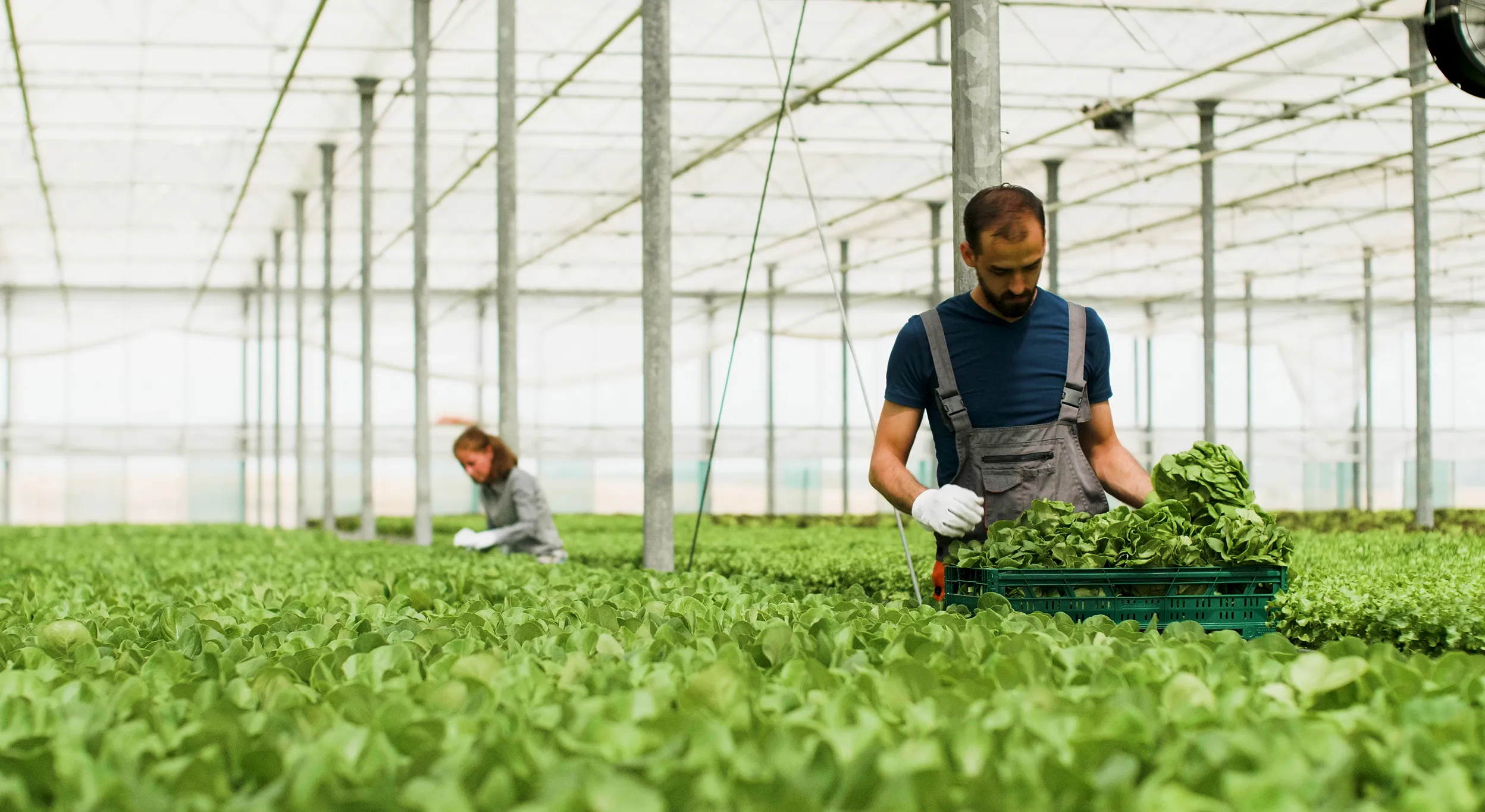
Create fields, sheds, or greenhouses as work locations with no cost per site.

Agriculture
In agriculture the work happens in fields, greenhouses, and packing sheds where coverage doesn't always cooperate. Kinmu lets people clock in even without a connection, organize crews by location, and pay only for whoever is active that season.
In agriculture, clocking in can't depend on good signal or on a trip to the office. Crews start in fields, greenhouses, sheds, or at loading points, and headcount changes a lot from one season to the next. When time tracking is handled with sheets or handwritten notes, the data arrives late and it's hard to tell who was where.
Seasonal work makes that especially costly. In a peak week you might double your headcount for ten days, and the difference between a profitable harvest and a poor one often comes down to labor hours per location. Without a record tied to the place and the day, you're estimating your single biggest variable cost after the fact.
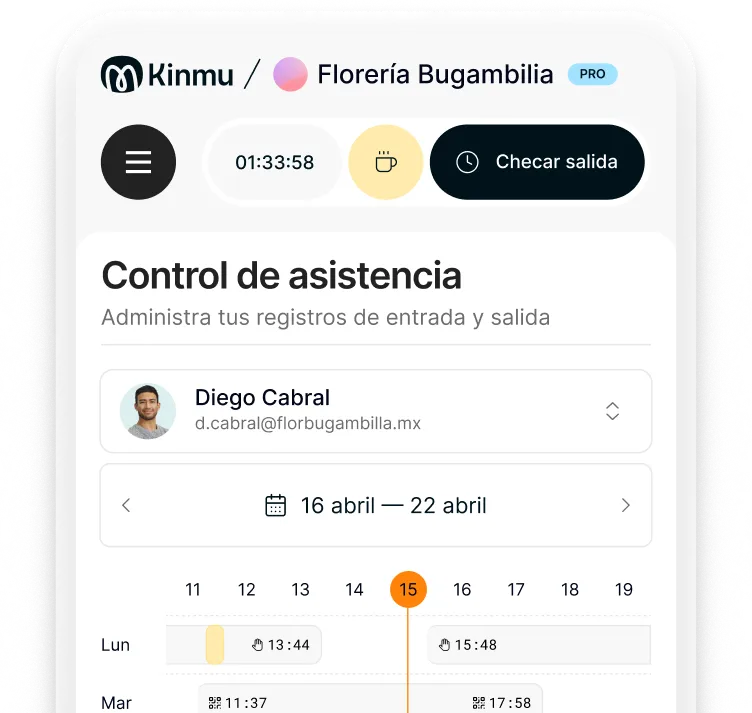
Kinmu lets you create farms or locations, clock in with a QR code, kiosk, or app, and store records offline until the connection returns. That brings order to the record and gives more clarity to whoever organizes the crews, particularly in peak weeks when availability changes daily.
Create fields, sheds, or greenhouses as work locations with no cost per site.
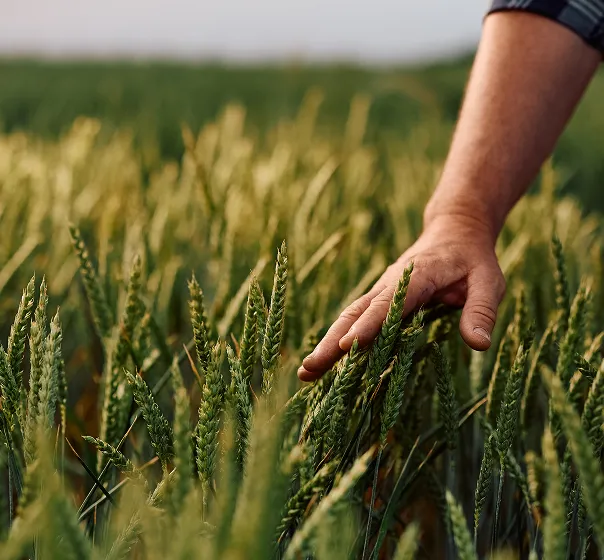
Use a QR code or kiosk at the access point to record the crew's hours.
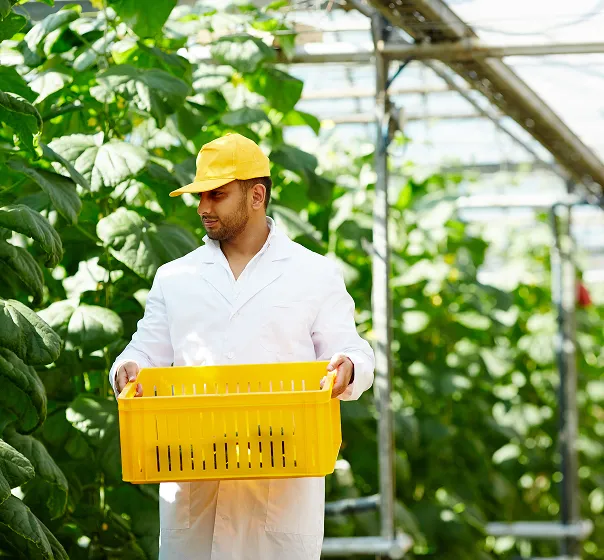
Activate people when they work and deactivate them once the season ends.
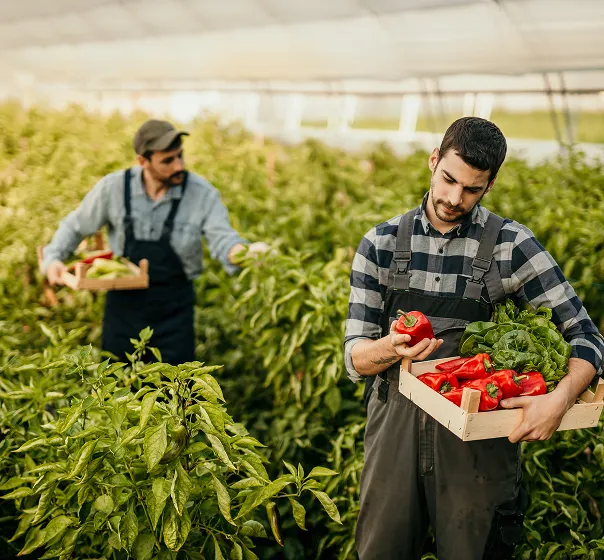
Check who's assigned, absent, or on time off before you plan the day.
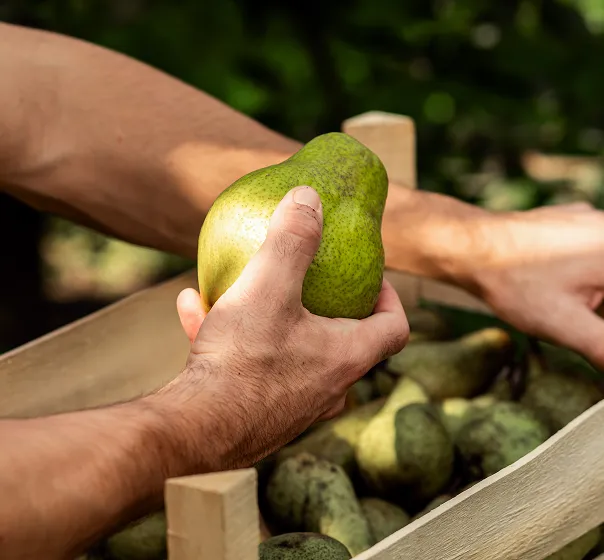
Review exceptions and attendance by farm, crew, or shed without driving to each one.

Day breaks on a site where the signal barely reaches. The crew comes in through the main entrance and clocks in with the QR code or the kiosk set up for that location. If the device has no internet, the record stays saved. Later, when the signal returns, the clock-ins sync and appear alongside every other location.
That same day another crew is in a greenhouse and several people are in the shed. Because each point is set up in Kinmu, you can see where each team is working and how many people are active. In peak season you bring on temporary staff without turning it into a permanent cost; when it's over, you deactivate them.
At the end of the week, records don't depend on handwritten notes or on remembering which crew was where. You can review hours by location, correct exceptions with a trail, and prepare time reports if you need them. Digital tracking adapts to the operation instead of demanding that the farm behave like an office.
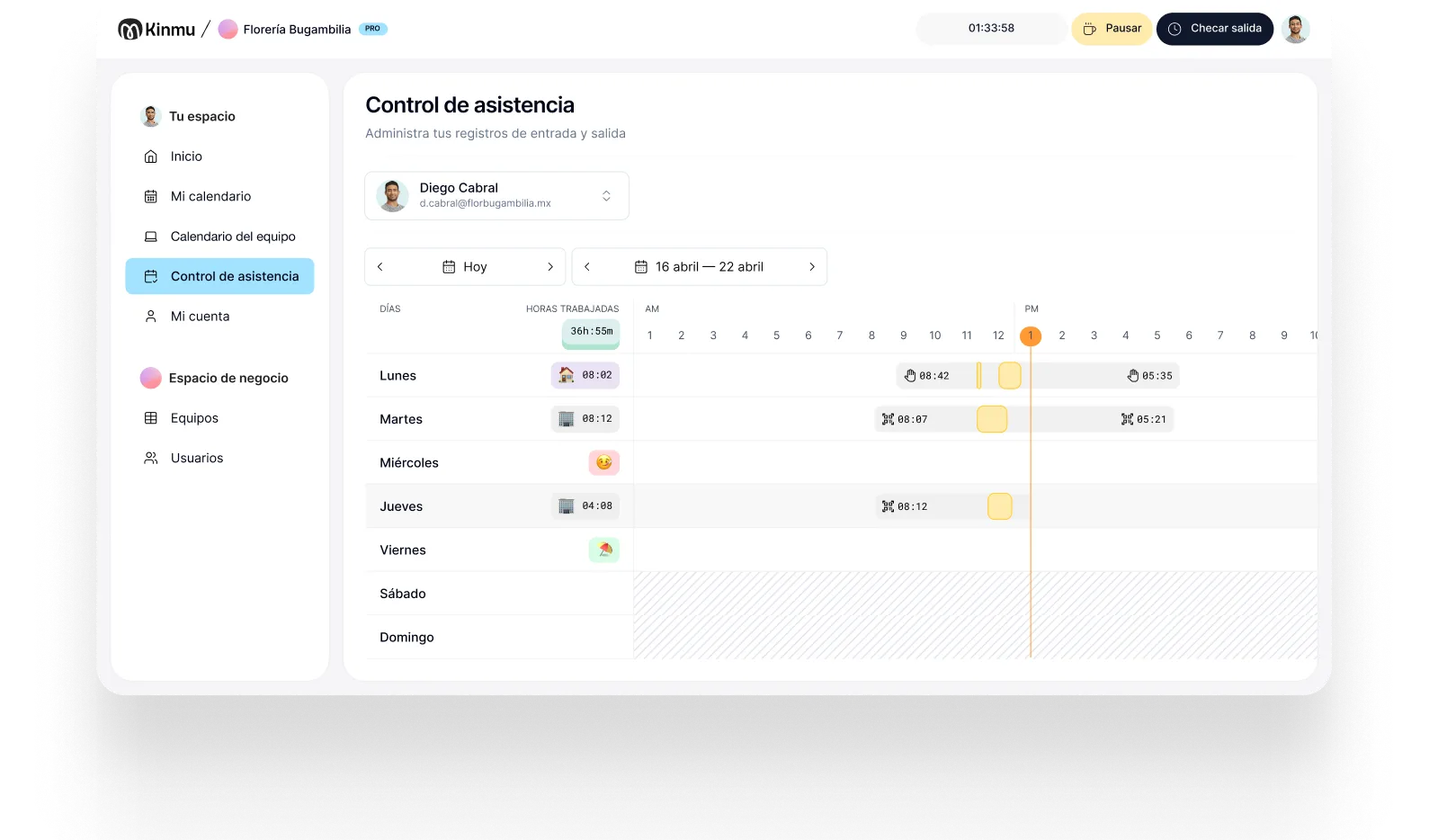
Clock-ins, clock-outs, and breaks saved automatically.
Every correction stays documented in the history.
Records stay in the cloud for five years.
Varied, non-intrusive ways to clock in.
Kinmu lets you track clock-ins across crews, locations, and seasons with flexible cost and offline recording.
Only active users each month.
Start with your real crew.
Flexible month to month.
Add fields or sheds.
You manage the account from the website.
Simple clock-in at the entrance.

Add sites, crews, and seasonal schedules.
Let people record arrivals and departures even with no signal.
Check attendance and exceptions at each work site.
Yes. Kinmu records the clock-in offline and syncs it once there's internet again.
Wherever you employ people, keeping a daily record is expected in most places, and with seasonal crews it's also the only way to know your real labor cost.
Yes. You can create fields, sheds, or greenhouses as work locations.
Yes. You pay for active people, which suits seasons with frequent arrivals and departures.
With a QR code or kiosk at the entrance, whichever is more practical at each location.
Not to record the clock-in. Data syncs once the device has a connection again.
The calendar helps you see crews, absences, and availability day by day.
Kinmu shows the exception and lets you correct it traceably.
Yes. Clock-ins are retained and you can review them or build reports from them.
No. Kinmu doesn't require fingerprints or biometrics.