
Free calculator
Hours worked calculator for your weekly timesheet
Add up your week from your start and finish times and breaks: hours for each day and the week, in hours and minutes and in decimal, with your pay in pounds if you add your hourly rate.
Enter your week
Type the time you started and finished each day and how long your break was. Leave days off empty.
Total hours this week
Estimated gross pay
An estimate to check your timesheet, not legal advice. Pay is before tax and National Insurance. Everything stays in your browser: nothing you type is sent or saved.
UK law sets no overtime rate. Whether extra hours are paid, and at what rate, depends on your contract: put its numbers in the two optional fields.
How the calculator adds up your week
- Each day. Finish time minus start time, minus your break if it’s unpaid. A finish earlier than the start is read as a night shift that ends the next day.
- The week. Monday to Sunday, in hours and minutes and in decimal, which is how most payroll and timesheet templates want it.
- Your pay. Your hourly rate times your hours, before tax and National Insurance. If your contract pays overtime, add the weekly hours it starts after and its rate, for example 1.5 for time and a half.
What the law says about your hours
There’s no legal overtime rate in the UK: what you’re paid for extra hours depends on your contract. The rules that do apply are about rest, and the calculator checks them for you:
- A 20-minute uninterrupted break when you work more than 6 hours in a day.
- 11 hours’ rest in a row between one working day and the next.
- An average of no more than 48 hours a week, normally over 17 weeks, unless you’ve opted out in writing.
Some jobs, such as shift work or work that needs round-the-clock cover, have exceptions, and your contract can give you more than the law does.
From a timesheet to a record you can trust
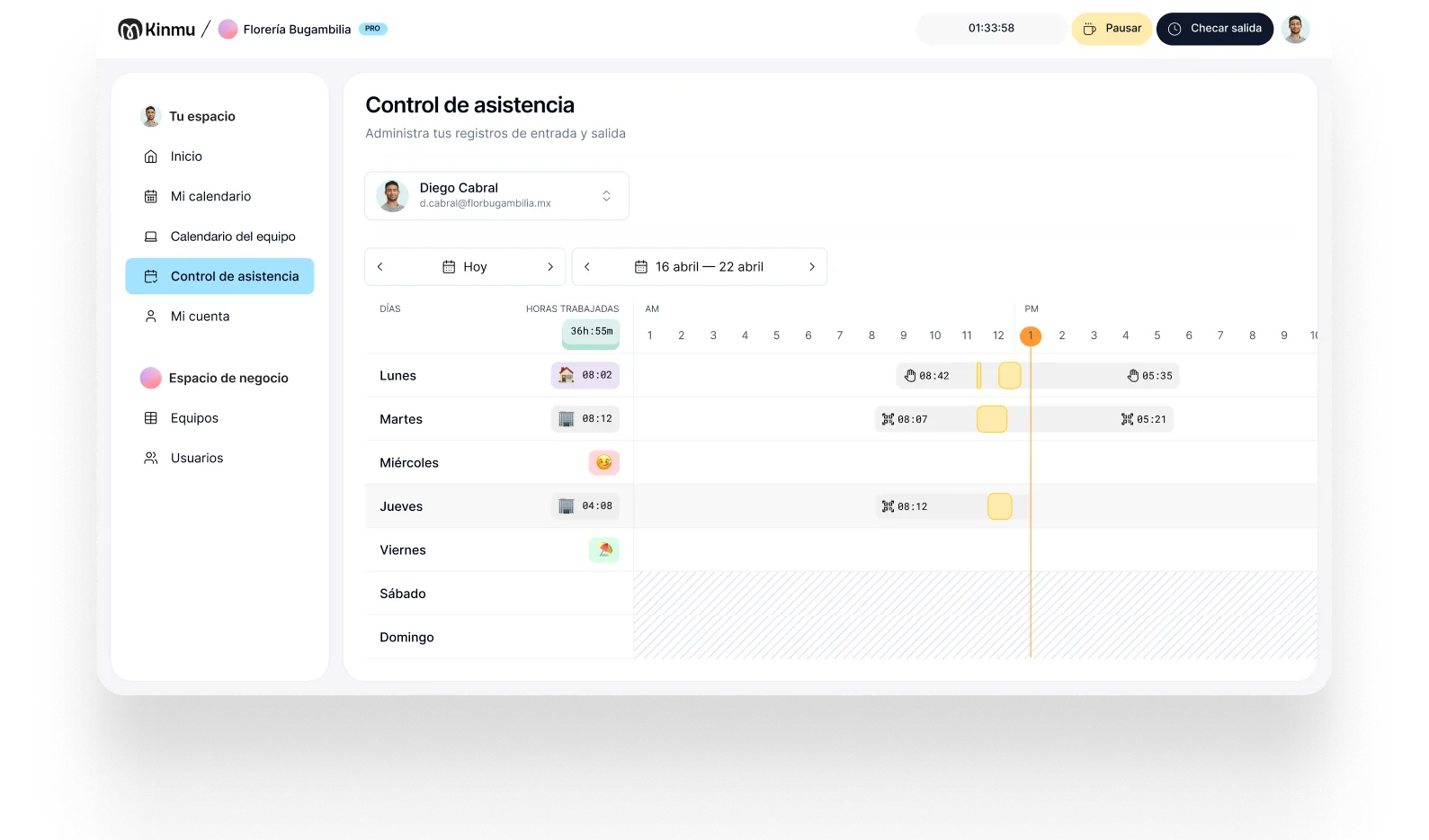
Adding up timesheets by hand every week is slow, and it’s where mistakes start. With Kinmu time tracking your team clocks in from their phone, breaks are recorded as they happen and the weekly hours are ready for payroll.
Planning next year? See the UK bank holidays for 2027. If your team is in the US, use the timesheet calculator with US overtime.
Let your team’s timesheets add up on their own
Try Kinmu for free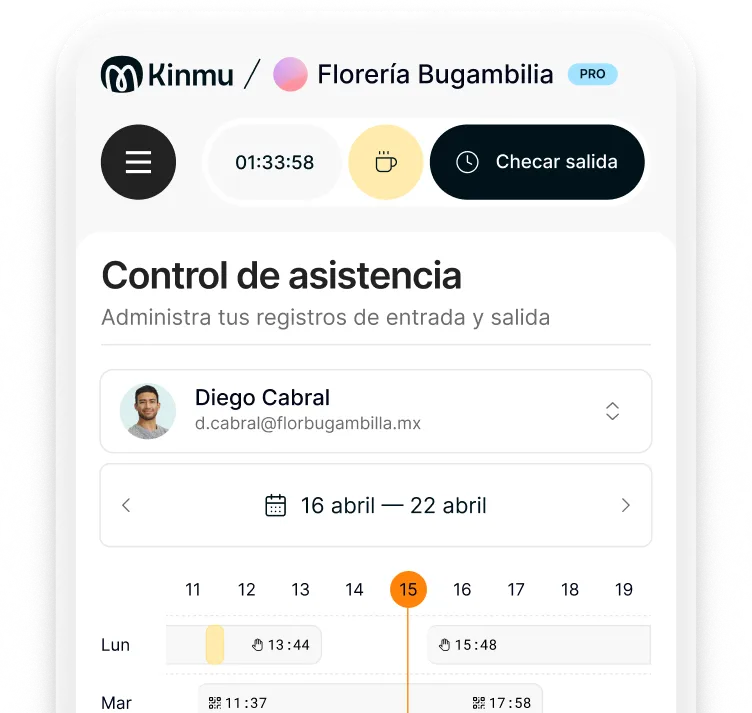
Frequently asked questions
How do I work out my hours worked with breaks?
Take your start time away from your finish time, then subtract any unpaid break. From 9:00 to 17:30 with a 30-minute unpaid lunch is 8 hours 30 minutes minus 30, so 8 hours. Add the days together for your weekly total. The calculator does every day at once and gives the total in hours and minutes and in decimal.
Do I get paid for my lunch break in the UK?
Not by law. Your break doesn’t have to be paid: it depends on your employment contract. If your contract pays for breaks, tick “My breaks are paid” and the calculator won’t take them off.
Is overtime paid at time and a half in the UK?
Only if your contract says so. Employers don’t have to pay for overtime, and there’s no legal overtime rate, but your average pay for all the hours you work must not fall below the National Minimum Wage. If your contract has an overtime rate, put the hours it starts after and the rate in the optional fields.
How long a break do I get in an 8-hour shift?
If you work more than 6 hours a day, you’re entitled to one uninterrupted 20-minute rest break, which you can spend away from your workstation (Working Time Regulations 1998, regulation 12). It can be a tea or lunch break. Workers under 18 get 30 minutes once they work more than four and a half hours. A collective or workforce agreement can set different terms.
How many hours’ rest should I get between shifts?
Adult workers are entitled to 11 consecutive hours of rest in each 24 hours (regulation 10). If you finish at 20:00, you shouldn’t start again before 07:00. The calculator flags any gap shorter than that between two days in the week.
What is the maximum number of hours I can work in a week?
48 hours on average, normally worked out over 17 weeks, so one long week doesn’t break the limit on its own (regulation 4). You can agree in writing to opt out. If you’re under 18, you can’t work more than 8 hours a day or 40 hours a week.
How do I convert hours and minutes into decimal for my timesheet?
Divide the minutes by 60 and add them to the hours. 7 hours 30 minutes is 7.5, 7 hours 45 minutes is 7.75 and 7 hours 20 minutes is 7.33. Multiply the decimal hours by your hourly rate to get your pay.
Does this apply in Northern Ireland?
The Working Time Regulations 1998 cover England, Wales and Scotland. Northern Ireland has its own working time regulations, so check the rules there. The hours you add up are the same wherever you work.
Official sources
- GOV.UK: Overtime, your rights
- GOV.UK: Rest breaks at work
- GOV.UK: Maximum weekly working hours
- Working Time Regulations 1998, regulation 12: rest breaks
- Working Time Regulations 1998, regulation 10: daily rest
- Working Time Regulations 1998, regulation 4: maximum weekly working time
Data reviewed on 12 October 2026.