
Free calculator
Holiday entitlement calculator for your whole team
Work out statutory holiday for everyone in your team at once: part-time and pro rata, people joining or leaving during the year, holiday to pay when someone leaves and the 12.07% for irregular hours. A guide based on the Working Time Regulations, with your contract’s days if they’re higher.
Work out holiday entitlement
A guide based on the Working Time Regulations 1998. What you type stays in your browser.
The team view counts this leave year's entitlement only. It leaves out holiday carried over from previous years, so add that to each person's balance yourself.
Holiday days in your team
Still to be taken
How much holiday someone has built up by their last day, and how much is left to pay. Untaken statutory holiday has to be paid when someone leaves (regulation 14). This works out the days, not the pay. The last day of work counts as a day employed, as in the GOV.UK calculator.
Holiday to pay on leaving
Built up by the last day
Pick when the leave year started and the last day of work.
For irregular-hours and part-year workers, in leave years starting on or after 1 April 2024. Holiday builds up at 12.07% of the hours worked in each pay period (regulation 15B). Type the paid hours worked in each pay period of the leave year so far.
Pay periods spent on sick, maternity or other statutory leave still build up holiday, based on average hours (regulation 15C). This calculator only counts hours actually worked, so add those periods separately.
Holiday built up
0 hours
Each period is rounded to the nearest hour: under 30 minutes counts as none.
Hours worked only: periods on sick or statutory leave are not included.
Hours worked
0
No more than 28 days of holiday can build up in a leave year.
The statutory minimum
Workers in Great Britain get at least 5.6 weeks of paid holiday in each leave year, capped at 28 days. In days, that depends on how many days a week someone works:
| Days worked a week | Statutory holiday |
|---|---|
| 5 | 28 days |
| 4 | 22.4 days |
| 3 | 16.8 days |
| 2.5 | 14 days |
| 2 | 11.2 days |
| 1 | 5.6 days |
| 6 | 28 days |
If your contracts give more, type the yearly total for each person and the calculator works with that. It never goes below the legal minimum.
Joiners, leavers and the whole team at once
The GOV.UK calculator works out one person at a time. Here you add your whole team, pick when your leave year starts and see everyone’s entitlement and what they still have to take, then download it for Excel.
- Joining during the year: the share of the leave year left on their first day.
- Leaving during the year: the share of the leave year up to their last day, minus what they’ve taken. Whatever is left is paid in lieu.
- Irregular hours: 12.07% of the hours worked in each pay period.
We count the exact days. The GOV.UK calculator rounds joiners to whole months and up to the next half day, so its figure can be a little higher. The calculator counts days, not pay, and it’s a guide, not legal advice. Planning next year? See the UK bank holidays for 2027 or count the working days between two dates.
From a spreadsheet to balances that look after themselves
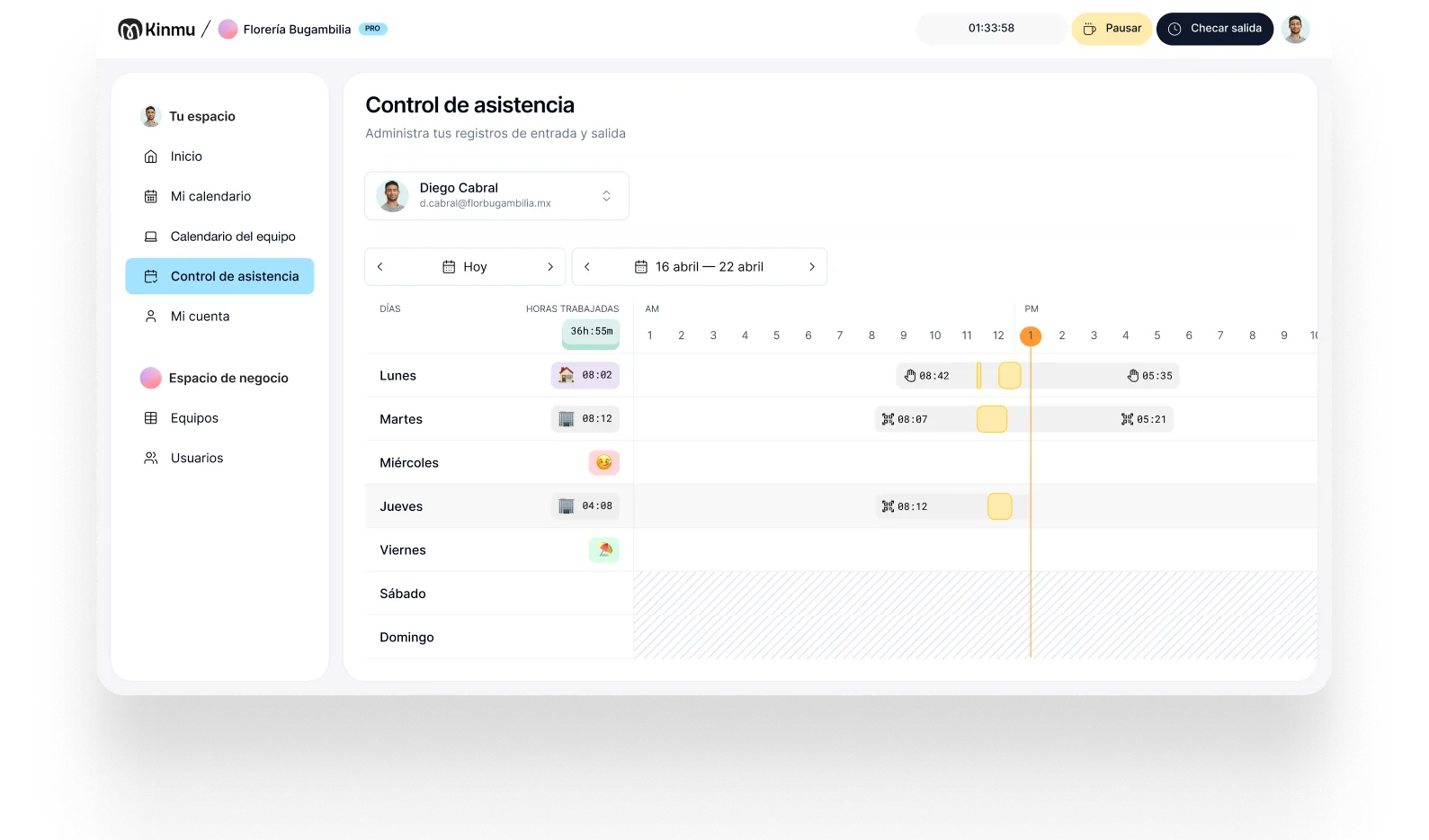
A spreadsheet works for a small team. As it grows, keeping track of balances, requests and who’s off gets harder. With Kinmu absence management, your team books holiday from their phone, you approve it in one tap and the team calendar shows who’s in and who’s off.
Plan your team’s holidays without a spreadsheet
Try Kinmu for free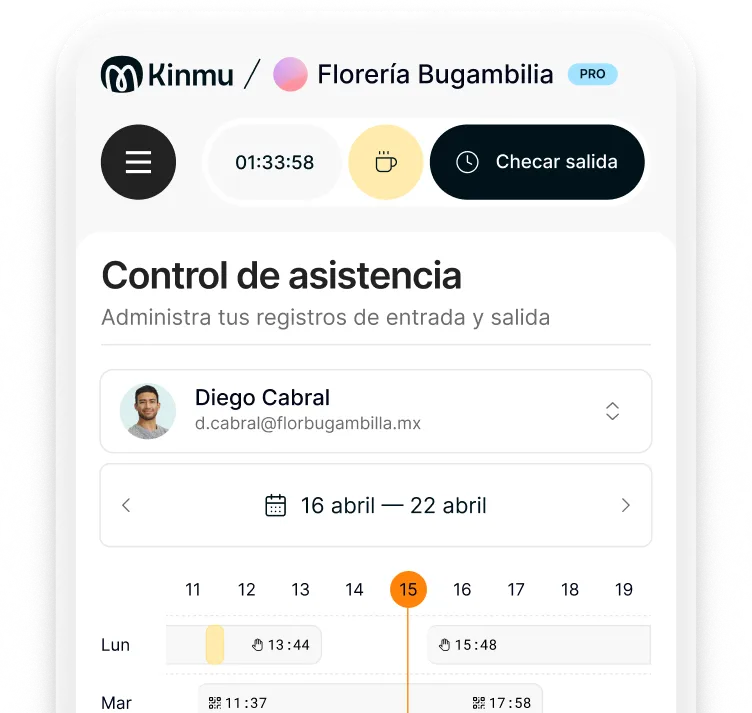
Frequently asked questions
How much holiday am I entitled to in the UK?
At least 5.6 weeks of paid holiday a year: 4 weeks under regulation 13 of the Working Time Regulations 1998 and 1.6 more under regulation 13A. For a five-day week that’s 28 days, which is also the most the law requires: the total is capped at 28 days, even if you work six days a week. Your contract can give you more.
How do I work out pro rata holiday for a part-time worker?
Multiply the days they work each week by 5.6. Three days a week gives 16.8 days a year, four days gives 22.4. Part-time workers get the same 5.6 weeks off as full-time staff, just made up of fewer working days. If their contract gives full-time staff more than the minimum, the extra is usually scaled the same way.
How much holiday do I get if I start part way through the year?
The proportion of the leave year that’s left on your first day (regulations 13(5) and 13A(5)). Starting on 1 July 2027 in a leave year that runs from January, with a five-day week, gives 184 of 365 days, so 14.12 days. In your first year, holiday builds up at one twelfth a month, so you may not be able to take it all in one go early on.
How much holiday am I owed when I leave a job?
The share of the leave year that has passed by your leaving date, minus what you’ve already taken (regulation 14). Leaving on 31 March 2027 after taking 5 days, with a five-day week and a leave year from January, gives 6.9 days built up and 1.9 days to be paid. On three days a week, leaving on 30 September in a leave year from April gives 8.4 days.
Do I get paid for unused holiday when I leave?
Yes. Your employer must pay for statutory holiday you’ve built up and not taken, even if you’re dismissed for gross misconduct. It’s the only time holiday can be paid instead of taken. If you’ve taken more than you’ve built up, your employer can only take money from your final pay if you agreed to it in writing beforehand.
Are bank holidays included in the 28 days?
They can be. You have no legal right to have bank holidays off, and your employer can count them as part of your 28 days. Many contracts say “20 days plus bank holidays”, which is the same as 28 for a five-day week in a year with 8 bank holidays. Put the total in the calculator, bank holidays included if they count.
How is holiday worked out for irregular hours and zero-hours workers?
For leave years starting on or after 1 April 2024, irregular-hours and part-year workers build up holiday at 12.07% of the hours they work in each pay period (regulation 15B). 100 hours in a month gives 12 hours of holiday. Part of an hour under 30 minutes counts as nothing and 30 minutes or more as a full hour. No more than 28 days can build up in a leave year. Periods on sick, maternity or other statutory leave still build up holiday, based on the average hours worked before (regulation 15C).
Who counts as an irregular-hours or part-year worker?
An irregular-hours worker is someone whose paid hours in each pay period are, under their contract, wholly or mostly variable. A part-year worker is someone who only has to work part of the year, with periods of at least a week when they don’t work and aren’t paid, like term-time staff (regulation 15F).
When does the leave year start?
On the date in your contract or workplace agreement. Many companies use 1 January or 1 April. If nothing is agreed, the leave year starts on the day you started work and on each anniversary after that.
Does this apply in Northern Ireland?
The Working Time Regulations 1998 cover England, Wales and Scotland. Northern Ireland has its own regulations, so check the rules there before relying on these figures.
Official sources
- Working Time Regulations 1998, regulation 13 (legislation.gov.uk)
- Working Time Regulations 1998, regulation 13A (legislation.gov.uk)
- Working Time Regulations 1998, regulation 14, including 14(6) on carried-over leave (legislation.gov.uk)
- Working Time Regulations 1998, regulation 15A (legislation.gov.uk)
- Working Time Regulations 1998, regulation 15B (legislation.gov.uk)
- Working Time Regulations 1998, regulation 15C (legislation.gov.uk)
- Working Time Regulations 1998, regulation 15F (legislation.gov.uk)
- Holiday entitlement (GOV.UK)
- Taking holiday before leaving a job (GOV.UK)
Data reviewed on 13 October 2026.